
Article: Double‑Sided Wood Fireplaces vs Electric in Australia: Costs, Flues, Heat & Safety (2026 Guide)

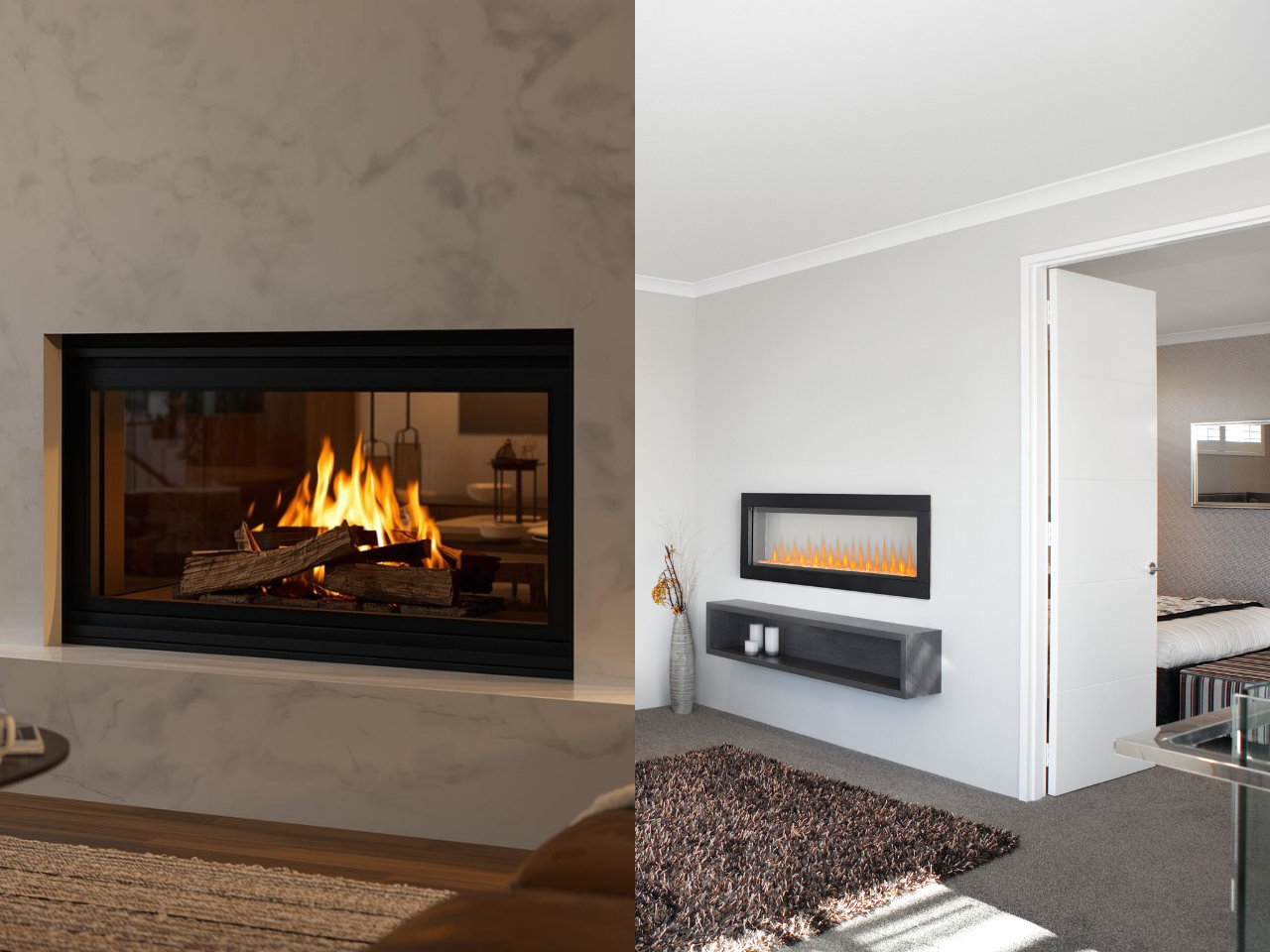
Double‑Sided Wood Fireplaces vs Electric in Australia: Costs, Flues, Heat & Safety (2026 Guide)
If you love statement architecture, a double sided wood fireplace is hard to ignore. One dramatic flame animates two spaces at once — say, living and dining — without blocking sightlines.
But there’s a catch.
Achieving that “magazine cover” look with wood is more involved than most homeowners expect: flue design, clearances, roof penetrations, smoke control, and constant maintenance are all part of the deal. Meanwhile, modern two ‑ and three ‑ sided electric fireplaces deliver the same visual impact with far less friction. This guide compares both options for Australian homes so you can choose the centrepiece that fits your layout, lifestyle, and budget.
What is a Double‑sided Wood Fireplace (and why do people want one)?
A double sided fireplace (often called “see‑through”) uses a single firebox with two viewing windows. You’ll typically place it within a stud or masonry wall that divides zones—lounge and dining, living and hallway, or a room divider in a large open plan. The attraction is obvious: the fire becomes a unifying design element, visible from multiple angles, and it can gently radiate warmth to both spaces.

Double-sided fireplaces need more considerations upon installation.
Reality check:
A see‑through wood unit is more sensitive to room pressure and wind conditions than single‑sided models. With two openings, airflow dynamics can change quickly—open a door on the wrong side at the wrong time and smoke can spill. That doesn’t mean it can’t be done; it means the design and installation must be meticulous.
Installation in Australia: Flues, Clearances, and the “Hidden Work”
Installing a double sided wood fireplace is an engineering project rather than a simple décor upgrade.
-
Flue and draft design.
You’ll need a correctly sized, insulated fireplace flue kit, a straight and tall run where possible, and careful planning around elbows, offsets, and roof penetrations. The flue must maintain stable draft across two openings—more complex than a single aperture. Even small errors here can create smoke spillage, odour drift, and dirty glass. -
Clearances and non‑combustible materials.
Because heat radiates from both faces, expect enlarged hearth areas, non‑combustible linings, and strict clearances to mantels, shelves, and soft furnishings. The bigger “heat halo” around a see‑through unit means more floor and wall area is “design‑locked” by safety. -
Penetrations and weatherproofing.
Roof penetrations for the flue require flashing, insulation, and careful detailing to avoid water ingress. In bushfire‑prone regions, ember protection, spark arrestors and appropriate cowl choices may apply, adding cost and complexity. -
Finishing both sides.
You’re essentially building two features—both faces need cladding, trims, and detailing. That can mean stone or tile on one side and joinery on the other, with the budget to match.
Bottom line:
With wood, the installation effort is significant. If your project includes an open fireplace aesthetic (true open hearth), expect even tighter safety margins, higher heat loss, and more smoke‑management challenges. Most modern builds opt for closed, see‑through fireboxes instead of fully open hearths for these reasons.
Ongoing Ownership: Maintenance and Day‑to‑day Living
A beautiful double sided wood fireplace demands continual care:
- Chimney sweeping to keep draft efficient and reduce creosote buildup.
- Ash removal and disposal, plus storage for kindling and wood.
- Glass cleaning on two faces—more handling, more supplies, more time.
- Fuel logistics: splitting, stacking, seasoning, and keeping pests and debris out of living areas.
- Uneven warmth: radiant heat feels different room to room; you may have “hot seat” zones near glass and cooler corners across the plan.
- Noise and odour: the crackle is charming; occasional smoke whiffs are not—especially on gusty nights.
For some households—rural settings, ready access to timber, love for the ritual—this is all worth it. For urban families juggling school runs and weeknight dinners, not so much.
Electric Alternatives: Two and Three‑sided Designs Without the Friction
Modern multi‑sided electric fireplaces—including 2 sided, 3 sided, and corner electric fireplace formats—replicate the “wow” with radically simpler installation and daily living:
-
No flue or chimney
Install within a timber stud wall, media wall, or room divider. No roof penetrations, no cowl, no smoke. -
Family‑friendly safety
Cool‑to‑touch glass and built‑in over‑temperature protection reduce risks around kids and pets. -
Flexible heat and control
Run flame‑only for ambience in summer; use fan‑assisted heat with thermostat, timers, and remote control in winter. Great for zoned heating—warm the living area without running the whole home. -
Low maintenance
No ash, soot, or sweeping. Wipe the glass, vacuum the cavity occasionally, and you’re done. -
Design freedom
Choose linear bays, 3 sided electric fireplace options for a “glass‑on‑three‑sides” look, or a corner format to open up smaller rooms.

The Napoleon Clearion series allow the benefits of a traditional fireplace without the friction.
Napoleon’s multi‑sided lineup is especially strong on flame realism (layered LEDs and ember media), quiet operation, and smart control, so you keep the punchy feature and the daily convenience.
Side‑by‑side Comparison (Practical Buyers’ View)

Installation
-
Wood: Flue kit, roof penetration, strict clearances, dual‑face finishing, frame reinforcement.
-
Electric: Cavity framing + dedicated power; no flue; faster fit‑out and easier approvals.
Running & comfort
-
Wood: Radiant warmth but can be uneven across two rooms; no flame‑only mode.
-
Electric: Thermostatic fan heat, zoned comfort, and flame‑only for year‑round ambience.
Maintenance
-
Wood: Chimney sweep, ash removal, glass cleaning (two faces), wood logistics.
-
Electric: Minimal—wipe glass; occasional dusting.
Safety
-
Wood: Live flame, embers, hot surfaces; smoke/CO risk if venting is compromised.
-
Electric: No combustion, cool‑to‑touch front, auto shut‑off.
Noise & odour
-
Wood: Pleasant crackle with potential smoke odour if draft falters.
-
Electric: Whisper‑quiet fan; odourless operation.
Aesthetic versatility
-
Wood: Authentic flame and rustic charm; hearth mass can limit layouts.
-
Electric: Wide size/shape options—linear, three sided fireplace, corner—and custom flame effects.
Environmental friendly
-
Wood: Particulates and smoke; responsible wood sourcing essential.
-
Electric: Zero on‑site emissions; plays nicely with rooftop solar for low‑carbon ambience.
Cost Considerations (Directional—Not Quotes)
When you tally costs, go beyond sticker price and consider the full lifecycle.
Upfront (install):
-
Wood (double‑sided): Premium unit pricing, insulated flue, roof works, labour, and finishing on both sides—costs stack quickly.
-
Electric (multi‑sided): The unit, cavity framing, electrical connection, finishing. No flue parts, no roof detailing, and typically less labour time.
Ongoing:
-
Wood: Firewood (or your time), chimney sweeps, glass cleaners and seals, soot cleanup.
-
Electric: Electricity (only when heating), virtually no consumables.
Hidden & opportunity costs:
-
Wood: Storage space for cords of wood; cleaning soft furnishings that can absorb smoke over time; scheduling sweeps and maintenance.
-
Electric: Near‑zero. The “cost” is choosing a high‑quality unit so the flame effect looks premium rather than toy‑like—Napoleon solves for this with sophisticated visuals.
When a Double‑sided Wood Fireplace Still Makes Sense
We believe electric as the superior everyday choice, but wood absolutely retains a place:
-
Rural or semi‑rural homes with abundant timber supply.
-
Design intent where a masonry mass, crackle, and wood aroma are central to the brief.
-
Large, open volumes where the ritual and radiant feel are part of the lifestyle.
If that’s you, a double sided wood fireplace can be magic—with the budget, maintenance appetite, and expert installer to match. For everyone else, multi‑sided electric will likely deliver the same visual drama with far fewer strings attached.
Layouts & Styling That Maximize Impact

The Napoleon Clearion series allow the benefits of a traditional fireplace without the friction.
-
Room divider elegance (2 sided fireplace):
Separate living and dining without losing openness. Electric makes this layout easy: no flue chase dictating where the wall must sit or how high it can run. -
Media wall with depth (three sided fireplace):
A 3 sided electric fireplace adds visual “wrap” around the flame, so multiple seats in the lounge get a front‑row view. Pair with low cabinetry and acoustic panelling. -
Corner solutions (corner electric fireplace):
Perfect for compact rooms where a central feature would cramp circulation. Corner glass keeps the room feeling wide while delivering a theatrical flame. -
Apartment & townhouse installs (small electric fireplace):
Slim cavities and shorter walls can still host a striking feature when there’s no flue to route. Consider linear models in the 1000–1500 mm range with shallow depths.
Love the double‑sided look but not the flue, smoke, or upkeep?
Explore Napoleon’s multi‑sided Clearion electric fireplaces—realistic flame technology, flexible installation, and family‑friendly safety tailored to Australian homes today!
FAQs
Q: Do electric fireplaces actually heat well, or are they just ambience?
A: Quality electric fireplaces use fan‑assisted heaters and thermostats to warm the immediate zone. You won’t replace whole‑home heating, but you’ll add comfortable zoned warmth exactly where you sit and relax.
Q: Do electric models need a flue or any kind of chimney?
A: No—there’s no combustion, so no flue. That’s why they’re easier for apartments, second‑storey rooms, and renovations with strict roof lines or heritage constraints.
Q: Can I convert an existing cavity to electric?
A: Often yes. Depending on dimensions and power access, you can repurpose an older opening for a built‑in electric unit or use an insert designed to sit within a prepared recess.
Q: Do electric flames look real?
A: The best units use layered LEDs, ember beds, and reflective media for depth and movement. Napoleon is known for top‑tier flame realism, so you get the ambience without soot or smoke.
Q: Is a double‑sided electric possible?
A: Yes—look for models designed as 2 sided or 3 sided “bay” installations; many can be configured as corner or fully three‑sided for maximum visibility.
Leave a comment
This site is protected by hCaptcha and the hCaptcha Privacy Policy and Terms of Service apply.